Imparare che cosa feltro di nichel è, come feltro di fibra di nichel sinterizzato viene utilizzato nelle applicazioni di filtrazione e alta temperatura, e come specificare il materiale giusto.
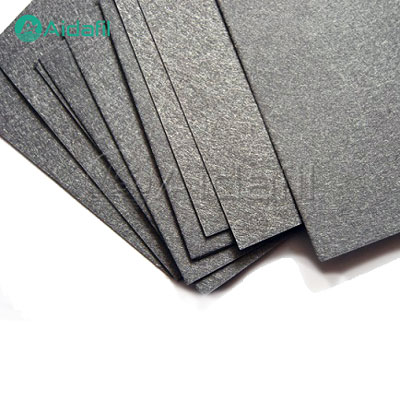
Nickel si sentiva is a porous metal material made from nonwoven nickel fibers. After the fibers are compressed and sintered, they form a strong, permeable structure with an interconnected pore network. This combination of metallic durability, controlled porosity and thermal stability makes nickel felt suitable for demanding filtration, high-temperature and electrochemical applications.
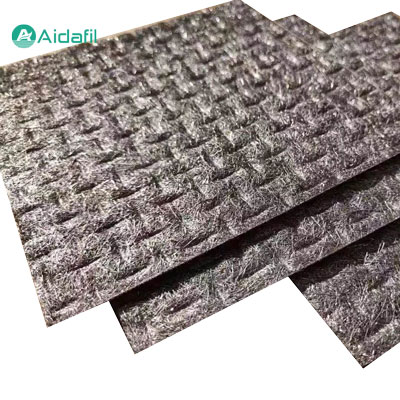
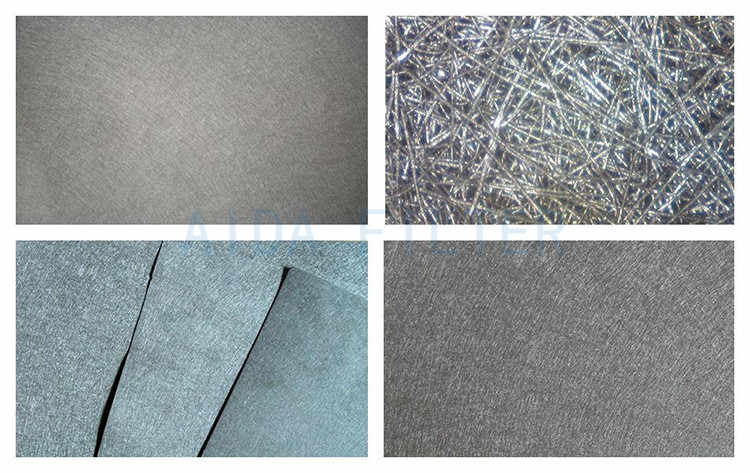
Unlike woven wire mesh, nickel felt does not rely on a simple grid of openings. Its randomly oriented fibers create a three-dimensional depth-filtration structure that can retain particles throughout the material rather than only on the surface. This can provide a useful balance between filtration efficiency, permeability, pressure drop and service life. It is one of several porous media used in industrial metal filter elements.
What Is Nickel Felt?
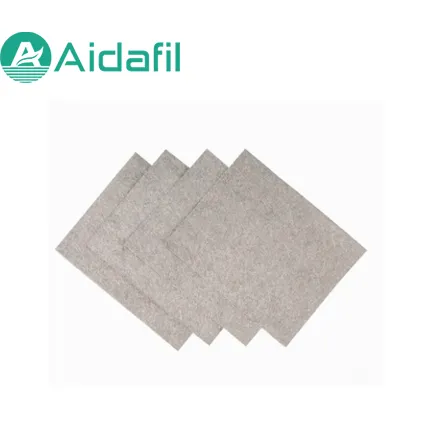
Nickel felt, also called nickel fiber felt or porous nickel felt, is generally produced from commercially pure nickel fibers. The fibers are formed into a nonwoven web, layered to the required thickness and sintered at high temperature in a controlled atmosphere.
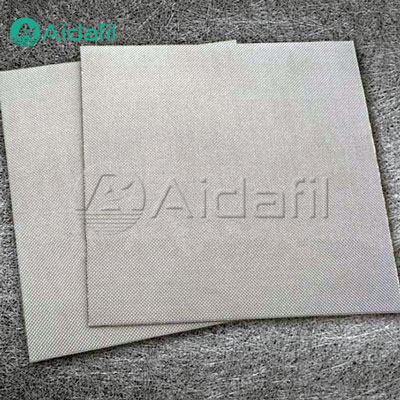
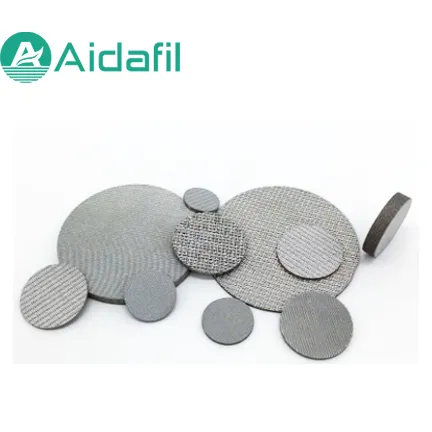
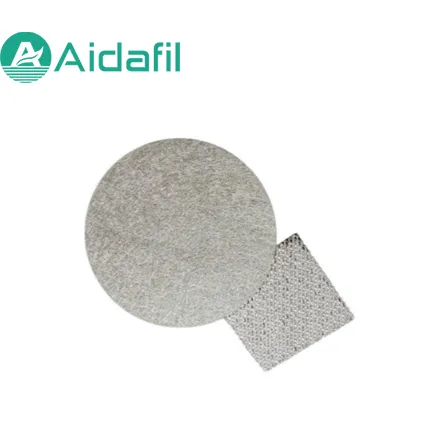
During sintering, the contact points between the nickel fibers bond together. This creates a continuous metallic structure with controlled porosity. The finished material can be supplied as sheets, discs, tubes, custom-cut parts or complete filtration elements, depending on the application and manufacturing capability.
Sintered nickel felt is different from nickel foam. Nickel foam has a cellular, open-cell structure, while nickel felt uses randomly oriented metal fibers. Nickel felt is also different from pressed nickel powder products. Each material has its own pore structure, mechanical behavior and suitable applications.
How Sintered Nickel Felt Is Made
The exact production process varies by manufacturer, but a typical route includes fiber preparation, web formation, compression, sintering and finishing.
1. Fiber preparation
Nickel fibers are selected according to diameter, length and material grade. Fiber dimensions influence pore size, permeability, surface area and mechanical strength.
2. Nonwoven web formation
The fibers are dispersed and formed into a nonwoven web. Multiple layers may be combined to achieve the required thickness and material weight.
3. Compression
The fiber web is compressed to reach the target thickness and porosity. Small changes in compression can affect both pressure drop and filtration behavior.
4. Sintering
The compressed material is heated in a controlled atmosphere. At the sintering temperature, the fibers bond at their contact points without fully melting. This creates a stable porous metal structure.
5. Calendering and finishing
The sintered material may be calendered to improve thickness consistency and surface flatness. It can then be cut, formed, welded or assembled with support layers and housings.
Because several process variables affect the finished material, nickel felt should be specified by application requirements rather than by thickness or micron rating alone.
Key Properties of Nickel Felt
Nickel felt is selected for applications where conventional filter media may not provide the required combination of temperature resistance, corrosion resistance, conductivity and mechanical stability.
High porosity and permeability
Nickel felt has an interconnected pore structure with a high level of void space. This can provide good permeability at a relatively low pressure drop. The relationship between pore size, thickness, porosity and pressure drop should be confirmed for each specification.
Three-dimensional depth filtration
The nonwoven fiber structure allows particles to be captured on the surface and within the material. This depth-filtration mechanism can improve contaminant holding capacity compared with a thin, two-dimensional screen.
Thermal stability
Nickel has a high melting point, but this does not mean that every nickel felt product is suitable for every high-temperature process. Service temperature depends on the material grade, atmosphere, oxidation conditions, differential pressure and mechanical design. In oxidizing atmospheres, oxidation behavior is often more important than the melting point alone.
Resistenza alla corrosione
Nickel generally performs well in many alkaline and reducing environments. It is not universally resistant to every chemical, particularly strongly oxidizing acids or certain contaminated process streams. The final selection should always be checked against the actual media, concentration, temperature and chloride content.
Electrical and thermal conductivity
The continuous nickel fiber network provides electrical and thermal conductivity. This is useful in electrochemical, current-collection and thermal-management applications where a porous metal structure is required.
Formability and mechanical support
Sintered nickel felt can be cut and formed into different shapes. It can also be combined with perforated plates, woven mesh, frames or other support structures when the application involves high differential pressure or repeated cleaning.
Nickel Felt in Filtration
Nickel felt is used as a filtration medium in both liquid and gas processes. Its depth-filtration structure makes it suitable for applications where surface-only filtration would clog too quickly or provide insufficient contaminant holding capacity.
Typical filtration duties can include:
- High-temperature gas filtration
- Polymer melt and spinning filtration
- Industrial liquid filtration
- Catalyst recovery and fine particle retention
- Air and process gas polishing
- Protection of downstream equipment from metal particles and debris
For related porous metal media, see our overview of sintered metal fiber filtration.
In filtration, a nickel felt specification should not be selected from a micron rating alone. Two materials described as “10 micron” can behave differently if they have different fiber diameters, thicknesses, porosities, test methods or nominal and absolute ratings.
Buyers should clarify whether the stated filtration rating is nominal or absolute, how it was measured and whether it refers to particle retention, bubble-point pore size or another performance parameter.
Nickel Felt Beyond Filtration
The properties of porous nickel felt also make it useful in applications outside conventional filtration.
Catalyst support
Nickel felt can provide a porous metallic substrate for catalytic materials. Its surface area, permeability and thermal conductivity can be useful in reactor and gas-processing designs. The coating method and chemical compatibility must be evaluated for the specific process.
Electrochemical applications
Nickel felt may be used as a porous electrode substrate, current collector or diffusion layer in certain electrochemical systems. The required pore structure, conductivity, purity and corrosion resistance depend on the electrolyte and operating conditions.
Energy storage and battery research
Porous nickel structures are used in some battery, fuel-cell and energy-storage designs. Nickel felt can provide a conductive three-dimensional scaffold, but the final specification must consider electrolyte compatibility, compression, coating, cycle life and manufacturing requirements.
Thermal and mechanical applications
The metallic fiber network can be used in selected thermal, damping or structural applications. These uses should be assessed through application testing because fiber orientation, density, thickness and support conditions can significantly affect performance.
Custom nickel felt structures can be reviewed alongside other industrial filter products for application-specific assemblies.
Nickel Felt Compared with Other Porous Metals
Different porous metal materials are often compared for the same project. The correct choice depends on the process environment, required filtration performance and mechanical design.
| Materiale | Struttura | Common advantage | Points to confirm |
|---|---|---|---|
| Nickel si sentiva | Nonwoven sintered nickel fibers | Depth filtration, formability and conductivity | Chemical compatibility, oxidation resistance and compression |
| Nickel foam | Open-cell cellular nickel | High porosity and a continuous metal network | Pore uniformity, mechanical strength and coating |
| Sintered stainless steel felt | Nonwoven stainless steel fibers | Broad corrosion options depending on alloy | Chloride resistance, temperature and magnetic requirements |
| Mesh filo sinterizzato | Woven mesh with sintered layers | Predictable pore structure and mechanical stability | Surface loading, cleaning and filtration depth |
| Perforated plate | Machined or punched holes | Structural support and high strength | Limited fine filtration capability on its own |
Nickel felt is not automatically better than these materials. It is a suitable solution when its specific combination of nickel chemistry, porous fiber structure and metallic properties matches the application.
How to Select Nickel Felt
A reliable nickel felt specification should be built around the process, not around a single catalogue value.
1. Define the fluid and operating environment
Confirm whether the medium is a liquid, gas, polymer, electrolyte or multiphase stream. Record the operating temperature, pressure, pH, chemical composition and any trace contaminants.
Nickel felt should be reviewed carefully when the process contains oxidizing acids, aggressive chlorides or other chemicals that may attack nickel.
2. Define the particle retention requirement
Identify the particle-size range that must be captured and the acceptable downstream concentration. Clarify whether the target is protection of a downstream device, product quality, catalyst recovery or another process requirement.
Where possible, provide a sample of the contaminant or a particle-size distribution. This is more useful than a single nominal micron value.
3. Specify pore structure and permeability
Ask for the pore-size test method, permeability data and pressure-drop information at the intended flow rate. Confirm whether the supplied data applies to air, water or another test fluid.
The relationship between pore size and filtration efficiency is not fixed. Fiber diameter, thickness and porosity also affect performance.
4. Confirm thickness and mechanical design
Thicker nickel felt can provide more depth filtration and contaminant holding capacity, but it may also increase pressure drop. Thin material may be adequate for surface protection but less tolerant of repeated cleaning or high differential pressure.
For high-pressure or reverse-flow duties, consider whether a support layer, perforated plate or reinforced edge is required.
5. Review cleaning and replacement requirements
Nickel felt may be cleanable or reusable in some applications, but this must be verified for the actual contaminant and cleaning method. Confirm whether the element will be backwashed, ultrasonically cleaned, chemically cleaned, baked or replaced as a disposable part.
Cleaning can change pore structure, surface condition or mechanical strength if the method is unsuitable.
6. Confirm dimensions and installation details
Provide the required dimensions, shape, edge condition, flatness, connection method and available installation space. For replacement elements, include the original part dimensions, support arrangement and photographs where possible.
Do not rely only on a part number if the internal construction is unknown. A dimensional drawing and application description reduce the risk of an incorrect replacement.
If the operating conditions are unclear, contact our technical team with the available process details.
Information to Include in a Nickel Felt RFQ
A clear request for quotation should include:
- Nickel felt type and intended application
- Fluid or gas being filtered
- Operating temperature and pressure
- Chemical environment, including pH and chlorides
- Required particle retention or downstream cleanliness
- Flow rate and allowable pressure drop
- Required thickness, dimensions and shape
- Support, frame or connection requirements
- Cleaning method and expected service life
- Required inspection reports or material certificates
- Quantity and delivery requirements
Common Nickel Felt Selection Mistakes
Choosing only by micron rating
A micron value without a test method and reference condition can be misleading. Two nickel felt samples with the same nominal rating may have different permeability, dirt-holding capacity and service life.
Ignoring the operating atmosphere
Nickel’s high melting point does not guarantee oxidation resistance at every temperature. The process atmosphere can be the limiting factor.
Using a thin sheet without support
A porous felt can be mechanically stable on its own in some applications, but high differential pressure or reverse-flow cleaning may require additional support.
Assuming all nickel felt is chemically suitable
The material should be checked against the actual medium. Strongly oxidizing conditions and contaminated process streams require specific review.
Forgetting the cleaning cycle
A material that performs well when new may fail after repeated cleaning if the fiber structure compresses, blinds or loses strength.
Frequently Asked Questions About Nickel Felt
More general guidance is available in our filter selection FAQ.
What is nickel felt used for?
Nickel felt is used in filtration, catalyst support, electrochemical systems, energy-storage research and selected thermal or mechanical applications. Its main advantages are a porous metal structure, formability, conductivity and the properties of nickel as a metallic material.
Is nickel felt the same as nickel foam?
No. Nickel felt is made from nonwoven nickel fibers. Nickel foam has a cellular open-cell structure. Both can be porous and conductive, but their pore geometry, mechanical behavior and filtration characteristics are different.
Can sintered nickel felt be cleaned and reused?
In some applications, yes. Reuse depends on the contaminant, cleaning method, differential pressure and required cleanliness. The cleaning procedure should be confirmed before the element is placed into service.
Is nickel felt corrosion resistant?
Nickel offers useful resistance in many alkaline and reducing environments, but it is not suitable for every chemical. Strongly oxidizing conditions and certain contaminated streams can cause problems. Always confirm compatibility with the actual process medium.
How do I choose the pore size of nickel felt?
Start with the particle-size range that must be removed and the allowable downstream concentration. Then review pore-size test data, permeability and pressure drop together. A sample test is often more reliable than selecting by a single nominal micron value.
Can nickel felt be supplied in custom shapes?
It can be cut and formed into discs, sheets, tubes and other shapes in many cases. The feasibility depends on thickness, dimensions, edge quality, support requirements and the manufacturing capability.
Conclusione
Nickel felt is a versatile porous metal material for applications that require a combination of depth filtration, permeability, metallic strength, conductivity and thermal stability. However, successful selection depends on much more than a micron rating or a material name.
The most reliable approach is to define the process conditions, confirm chemical compatibility, review pore structure and pressure drop, and specify the support and cleaning requirements before ordering. A nickel felt element designed around the actual application will usually perform more predictably than a generic sheet selected only by thickness or nominal pore size.
Need help selecting nickel felt for your filtration or industrial application? Send us the fluid or gas, operating temperature, pressure, target particle size, flow rate and required dimensions. Our technical team can review the application and help confirm a suitable filtration structure.
Explore the Catalogo prodotti AIDA or send your application details to our technical team.